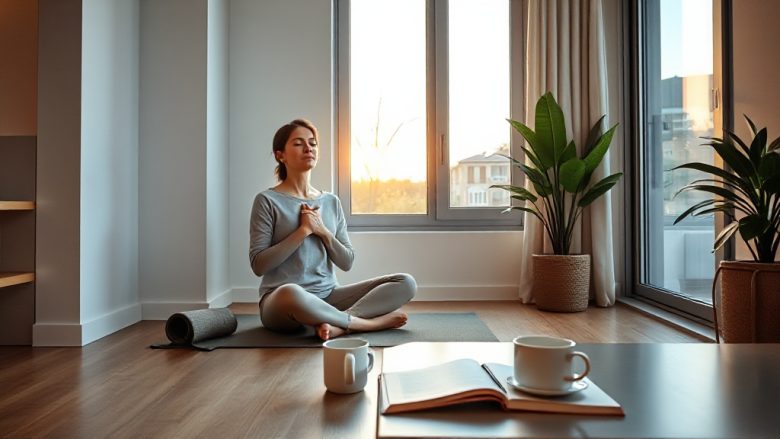
Stress is a normal reaction, not a personal failing. Your body is supposed to spike cortisol when something demands your attention, then settle back down once the moment passes. The trouble starts when the spike never quite resolves — when work messages follow you to the kitchen, when the news runs on a loop in your head, when you’re technically resting but your shoulders are up near your ears. If that sounds familiar, the good news is that you don’t need a spa weekend or a prescription to shift things. Learning how to reduce stress naturally at home is mostly about small, repeatable actions using things you already own. Think of what follows as a menu, not a cure. Pick two or three items this week, see how your body responds, and build from there.
Calm the Body First: Breathing, Temperature and Movement
When you’re wound up, reasoning with yourself rarely works because the physical arousal comes first. Start with the body and the mind tends to follow.
Try a longer exhale. Breathe in through your nose for a count of four, then out through your mouth for six to eight. The extended exhale nudges your nervous system toward the parasympathetic side, which is the branch responsible for rest and digestion. Five rounds is enough to notice a difference. Do it at your desk, in the car before you go inside, or lying in bed when your thoughts won’t slow down.
Use cold water on your face and wrists. Splashing cool water or holding an ice cube against your inner wrist for thirty seconds gives your system a mild, safe shock that can interrupt a spiral of anxious thinking. It’s a well-worn trick for a reason: it works quickly and costs nothing.
Walk, don’t sprint. A ten-minute walk around the block, up and down your stairs, or even pacing while you’re on a phone call counts. Movement burns off some of the stress hormones circulating in your blood and gives your eyes something to focus on other than a screen. You don’t need a gym or special shoes. You need to leave the room.
Quiet the Mind: Simple Ways to Stop the Mental Spiral
Once your body is a little less braced, you can work on the thoughts that keep you circling.
Write it down, then close the notebook. Racing thoughts feel less urgent when they’re on paper. Spend five minutes listing everything that’s bothering you — bills, a difficult email, a conversation you’re dreading. Then write one sentence next to each about what you can actually do today. Most items will say “nothing right now,” and that’s the point. You’re teaching your brain that the list exists somewhere other than your head.
Name the feeling out loud. Saying “I’m overwhelmed” or “I’m anxious about tomorrow” sounds almost too simple, but labelling an emotion reduces its intensity. It moves the experience from a vague background hum into something specific and therefore manageable.
Give your attention one small job. Washing dishes, folding laundry, watering plants, kneading bread. Any task that requires just enough focus to crowd out rumination works. The point isn’t the chore; it’s the anchor. When your mind wanders, and it will, bring it back to the warm water or the texture of the fabric. That’s the whole practice.
Change Your Space: Light, Sound and Clutter
Your environment does a lot of quiet work on your stress levels, often without you noticing.
Get outside light early. Ten to fifteen minutes outdoors in the morning — even on a grey day — helps regulate your body clock, which in turn affects sleep and mood. Stand on a balcony, walk to the end of the road, or drink your coffee by an open window. Indoor lighting is far dimmer than most people assume, so the real thing matters.
Lower the volume, not just the noise. Constant background sound — a television left on, a podcast you’re not really listening to — keeps your brain in a low-grade state of alert. Try twenty minutes of genuine quiet, or put on something instrumental at a volume you can ignore. Notice how different the room feels.
Clear one surface. You don’t need to declutter your whole home. Pick a single surface — the kitchen table, your bedside table, the corner of your desk — and clear it completely. Visual clutter competes for attention and makes it harder to settle. One clean surface gives your eyes somewhere to rest, and that small win often makes the next bit of tidying feel possible.
Build Small Routines That Protect Your Energy
Stress builds when there’s no buffer between one demand and the next. These habits create that buffer.
Protect your sleep window. Going to bed and waking at roughly the same time, even at weekends, does more for stress resilience than almost anything else. Dim the lights an hour before bed, keep your phone out of reach, and keep the room cool. If you can’t sleep, rest is still useful — lying down in the dark with your eyes closed is not wasted time.
Eat something real, at a table. Skipping meals and living on caffeine pushes your body into a stress response all by itself. You don’t need a perfect diet. You need regular meals with some protein and vegetables, eaten sitting down rather than standing at the counter. Blood sugar swings mimic anxiety, and it’s easy to mistake one for the other.
Say no to one thing this week. Chronic stress is often less about what’s happening and more about what you’ve agreed to. Look at your week and cancel or decline one commitment that isn’t essential. The relief you feel will tell you something useful about your baseline.
Connect with one person, properly. A phone call, a walk with a neighbour, a long chat with a friend over tea. Not a text thread — an actual conversation. Feeling understood by another person is one of the most reliable buffers against stress, and it’s available without spending anything.
When Home Remedies Aren’t Enough
Everything above is genuinely useful, but it isn’t a substitute for proper support when you need it. If stress is lasting weeks rather than days, if it’s affecting your sleep, appetite or ability to work, or if you’re relying on alcohol or other substances to cope, that’s a signal to talk to a doctor or a qualified therapist. Persistent anxiety and low mood are common and treatable, and asking for help is a sensible next step, not a failure of willpower. The same goes if you’re having thoughts of harming yourself — reach out to a crisis line or emergency service straight away.
For most people, though, the biggest gains come from small things done consistently. You don’t need to overhaul your life. Pick one item from each section, try it for a week, and keep what helps. Stress won’t disappear, but it doesn’t have to run the show.
Frequently Asked Questions
How quickly can these techniques work?
Some, like slow breathing or cold water on your wrists, can take effect within a minute or two. Others, like better sleep habits or regular walking, build up over a week or more. Think of the quick ones as tools for a tough moment and the slower ones as background support that raises your overall threshold.
Do I need to buy anything to reduce stress at home?
No. Every suggestion here uses things you already have: your breath, a tap, a notebook, a pair of shoes. Apps, supplements and gadgets can help some people, but they aren’t required, and starting with what’s free makes it easier to keep going.
What if I try everything and still feel stressed?
That’s worth paying attention to. If you’ve made a genuine effort for a few weeks and nothing shifts, or if the stress is getting worse, speak to your GP or a mental health professional. Sometimes the issue isn’t a missing technique — it’s a situation that needs outside help to change.
Can stress really be reduced without medication?
For many people, yes — lifestyle changes, breathing practices, sleep and social connection can meaningfully lower day-to-day stress. But that isn’t a rule for everyone. Medication is a legitimate and often necessary option, and the decision is best made with a doctor who knows your situation.